BLOG / PRACTICAL NOTES
What makes a gear comparison useful?
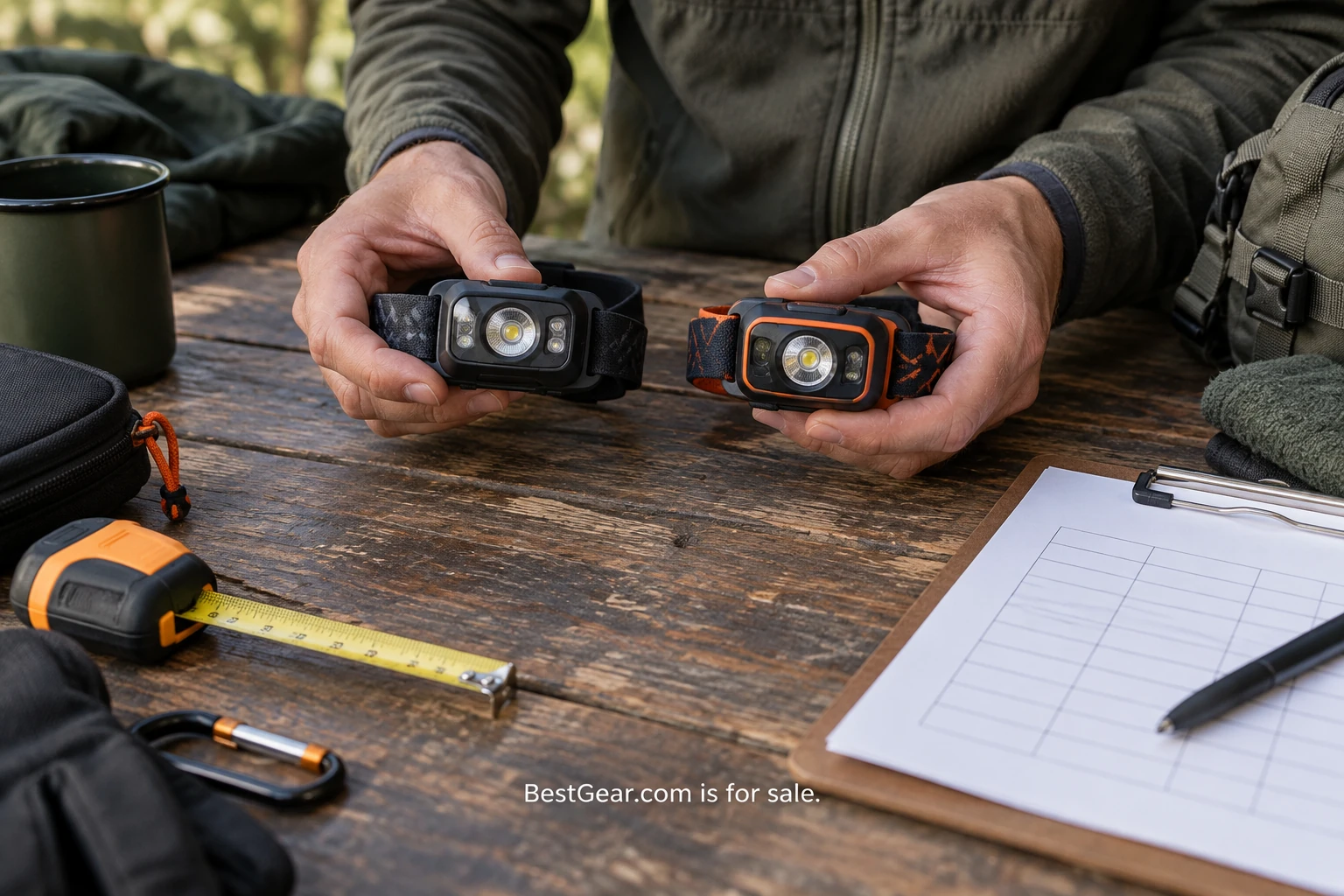
A gear comparison is useful when it helps you choose for your situation, including the reasons you might reject its top pick. A numbered list alone does not do that. Before accepting a verdict, look for a defined use case, comparable evidence and an explanation of the tradeoffs. You do not need a laboratory background to ask these questions. You need enough information to understand what the reviewer actually learned and whether it applies to you.
Begin with the decision you need to make
Write one sentence about the job the equipment must do. For example: carry a laptop, lunch and a rain layer during a train commute with twenty minutes of walking. That sentence is more useful than a general desire for the best backpack. It identifies the load, the setting and several constraints. A review aimed at overnight walking may contain excellent evidence but still answer a different question from yours.
Add the two or three details that would make a product unsuitable. Perhaps the bag must fit beneath a particular seat, the bottle must open with one hand, or a pouch must hold an item with fixed dimensions. These are screening questions. Apply them before spending time on fine distinctions in scores. A product that fails an essential requirement does not become a better fit because it ranks highly overall.
Find out what was actually examined
Look for a clear description of the coverage. Did the author handle a sample, use it repeatedly, compare manufacturer specifications or summarize other reviews? Each approach can provide information, but they support different claims. A specifications comparison can help identify dimensions and published features. It cannot establish how comfortable a strap feels after a long walk unless someone actually evaluated that experience.
Check the model and version. Names sometimes persist while materials, accessories or dimensions change. Photographs, model identifiers and a review date can help connect the evidence to the item you are considering. If the retailer shows a revised version, look for an explanation of what changed. An old review may still offer useful context, but the conclusion should not silently transfer to a product the author has never examined.
Ask whether the workloads are comparable
A comparison needs a consistent basis where consistency matters. If two bags carried different loads for different lengths of time, a comfort ranking deserves qualification. If one bottle was tested indoors and another in a cold outdoor setting, the conditions could explain part of the result. Good reporting tells you enough about the setup to see these differences instead of presenting the score as self-explanatory.
Consistency does not mean every product must be forced into the same unsuitable task. A small day bag and a large travel bag serve different purposes. A useful author may group them by use rather than declare one universal winner. Look for an explanation of which comparisons are fair and which are only descriptive. That distinction is especially helpful when a list includes products across very different sizes or designs.
Separate measurements from preferences
Measured empty weight, an opening width and the number of accessible pockets are observations you can evaluate against your needs. A preference for a stiff back panel or a particular pocket arrangement depends on the user. Both belong in a review, provided they are distinguished. Trouble begins when a personal preference is presented as an objective flaw or a manufacturer claim appears as though it were independently verified.
Read the language around certainty. Phrases such as “the manufacturer states” and “in this sample” explain the scope of a statement. They are often signs of careful reporting rather than hesitation. A reviewer who states what remains unknown gives you a more usable result than one who turns every limited observation into a broad claim about durability, comfort or performance.
Inspect the evidence behind the summary
Original images can show details that a score cannot. Look for a loaded compartment, a close view of a closure, the space around a fitted object or a measurement taken in a clear way. An attractive outdoor photograph establishes a setting; it does not necessarily support the conclusion beside it. Ask what each photograph helps you verify. A small number of purposeful images may be more informative than a large gallery of product beauty shots.
Tables should preserve meaning rather than compress it away. A five-star comfort rating is difficult to interpret without the load, duration and user context. A row that says a bottle fits a measured pocket gives you a concrete comparison point. Where the table uses scores, find the explanation of the scale and weighting. Consider whether those priorities match yours before treating the final total as a purchasing instruction.
Notice commercial relationships
A recommendation may appear alongside affiliate links, sponsored placements or products supplied by a manufacturer. These relationships can be relevant to how you assess the endorsement. The FTC's guidance on endorsements addresses disclosure of material connections. For a reader, the practical question is simple: can you understand the relationship at the point where you are evaluating the recommendation?
Disclosure does not replace evidence, and a commercial relationship does not tell you everything about an article's quality. Examine both. Look for a method, meaningful limitations and a correction process alongside the disclosure. If the piece does not explain how products were selected, that is another useful question to ask. A list of available affiliate products and a carefully scoped category comparison may look similar until you inspect their selection criteria.
Work through a two-bag example
Suppose Bag A has an easily reached front pocket and a structured laptop section, while Bag B provides a larger flexible compartment and a lighter empty weight. Your commute includes several access points: ticket gate, platform, desk and grocery stop. A helpful comparison would show what happens at those moments. Can you reach a pass while wearing the bag? Does removing the laptop require unpacking the rest? Is there room for the extra shopping you usually bring home?
The useful conclusion may be conditional. Bag A could suit someone who values organized access, while Bag B could suit someone whose load changes through the day. You still need to check fit, dimensions and current product information. The article has done its job if it clarifies the tradeoff and helps you ask better questions in a shop. It does not need to produce a single answer for every commuter.
Check limitations and maintenance of the review
Look for an update date, a corrections route and notes about discontinued products. A comparison is a piece of maintained information. Availability changes, product versions move on and an author may discover an error. A visible correction tells you what was revised and whether it affects the recommendation. A date alone is less informative if the page never explains what was checked during the update.
Keep your own short checklist: intended use, essential fit requirements, tested version, method, comparable conditions, observations, preferences, disclosures and unresolved questions. If several of those are missing, use the article as a starting point and continue investigating. Before buying, verify the current specifications and return terms with the seller. The best outcome is a decision you can explain in your own words, based on the equipment's fit for your day.